
SeaTac doesn’t always make the headlines when people talk about Western Washington real estate — but it probably should. Tucked into south King County and centered around Seattle-Tacoma International Airport, SeaTac offers something that’s getting harder to find in this region: accessible pricing with real transit connectivity.
For buyers who’ve been priced out of Seattle or Bellevue, SeaTac can feel like a genuine opportunity. And it often is — but like any opportunity, it comes with things you need to understand before you sign on the dotted line.
Here’s what I see consistently when I inspect homes in SeaTac.
The Housing Stock Is Mostly Mid-Century — and That Matters
The majority of SeaTac’s neighborhoods were built out between the 1950s and 1970s. That’s not a dealbreaker. Homes from this era were often well-built, with solid bones and established lots. But the systems inside them? Those are a different story.
When I walk into a mid-century SeaTac home, I’m paying close attention to:
- Electrical panels — Older panels (Federal Pacific, Zinsco, or even fuse boxes) can be safety concerns and may not meet current load demands
- Plumbing — Original galvanized steel pipes corrode from the inside out; you can’t always see the problem until water pressure drops or a pipe fails
- HVAC systems — Furnaces and ductwork from this era may be functional but inefficient, or nearing the end of their service life
- Roofing — A roof that’s 20–30 years old may look okay from the street but tell a very different story up close
None of these findings automatically mean “walk away.” But they do mean you need to know what you’re buying — and what it might cost to update — before you commit.
Rental History: What It Means for Maintenance
SeaTac’s location near the airport and its strong bus and Link Light Rail access have made it a popular rental market for decades. That’s great for investors — but it also means many of the homes I inspect here have rental histories that span years or even decades.
Rental properties aren’t inherently problematic. But deferred maintenance is a real pattern I see. When a property has cycled through multiple tenants and owners, routine upkeep sometimes gets pushed down the priority list. Small issues — a slow drain, a soft spot in the floor, a bathroom exhaust fan that vents into the attic instead of outside — can quietly compound over time.
I bring the same level of thoroughness to every SeaTac inspection regardless of whether a home was owner-occupied or a rental. The house doesn’t know the difference, and neither does a failing water heater.
Crawl Spaces: The Story Underneath
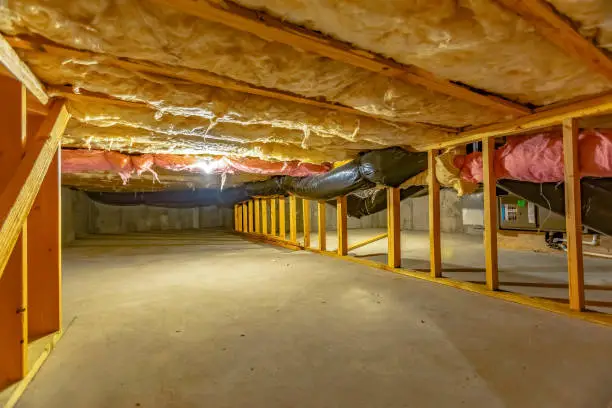
If there’s one thing that defines SeaTac’s mid-century housing stock, it’s crawl space construction. The vast majority of homes here sit over a crawl space rather than a slab or full basement — and in Western Washington’s wet climate, that matters a lot.
Crawl spaces in this region are constantly fighting moisture. When they’re properly maintained — with an intact vapor barrier, good ventilation, and no standing water — they do their job fine. But when they’re not, the problems can be significant:
- Inadequate or deteriorated vapor barriers allow ground moisture to evaporate up into the wood framing
- Elevated wood moisture levels create conditions where mold and wood rot can take hold
- Evidence of past water intrusion — staining, efflorescence, or damaged insulation — tells me the space has seen water before, even if it’s dry on inspection day
I document crawl space conditions carefully on every SeaTac inspection. It’s not meant to alarm buyers — it’s meant to give you a clear picture of what’s there and what, if anything, needs attention.
The Bottom Line for SeaTac Buyers
SeaTac is a real opportunity in a competitive market. Accessible prices, good transit, and established neighborhoods make it worth a serious look. But mid-century homes with aging systems, potential rental history, and crawl space construction deserve a thorough, experienced eye before you close.
That’s exactly what a professional home inspection is for.
Ready to get a clear picture of your SeaTac home? Jeff Frame at Epilogue Inspections has nearly 30 years of experience in Western Washington housing — as a contractor, remodeler, and licensed inspector. He’ll walk you through what he finds in plain language, so you can make a confident, informed decision.
📞 Call or text Jeff at 425-312-8976 🌐 Schedule online at epilogueinspections.com
Epilogue Inspections proudly serves SeaTac and all of King County, along with Snohomish, Pierce, Island, Skagit, and Whatcom Counties.