
 The roof is one of the first things people notice about a home — and one of the last things they think to worry about. It looks fine from the street. There are shingles up there. It’s probably okay, right?
Not always.
In nearly 30 years of working in and around Western Washington homes, I’ve learned that roofs are great at hiding problems until those problems become expensive. A small flashing gap. A few missing granules. A blocked soffit vent. None of these look like much on their own — but left unaddressed in the Pacific Northwest’s wet climate, they can turn into water damage, mold, and structural headaches fast.
Here’s a plain-language breakdown of what I’m looking for when I evaluate a roof — and why each category matters to you as a buyer.
Shingle and Surface Problems
The surface of your roof is your first line of defense. When I’m up there (or working from the ground and ladder with binoculars, depending on pitch and safety), I’m looking for:
- Missing or damaged shingles — Wind, impact from branches, and plain old age can knock shingles loose or crack them. Each gap is a potential entry point for water.
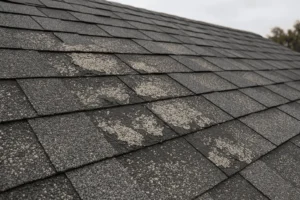
- Granule loss — Those tiny mineral granules on asphalt shingles protect the material underneath from UV damage. When you start seeing them pile up in gutters or around downspouts, the shingles are aging out.
- Curling or cupping shingles — Edges that curl up or cup downward signal age, moisture issues, or installation problems. Either way, they’re not lying flat — and flat is what keeps water moving off the roof.
- Exposed nail heads — Nails that have backed up through shingles over time create small but reliable leak points.
Flashing: The Detail Work That Makes or Breaks a Roof
If I had to pick one roofing category that causes the most water intrusion in Western Washington homes, it would be flashing. Flashing is the metal material installed wherever the roof meets something else — a chimney, a vent pipe, a wall, a valley. It’s the transition zone, and transitions are where water finds its way in.
Watch for:
- Deteriorated or rusted flashing — Metal that’s cracked, lifted, or corroded is no longer doing its job
- Missing flashing — Sometimes it was never installed correctly in the first place
- Caulked flashing — This one’s a red flag. When I see flashing that’s been sealed with caulk instead of properly lapped and mechanically fastened, I know someone did a temporary fix. Caulk fails. Proper flashing doesn’t.
Gutters and Drainage
Gutters aren’t glamorous, but they’re doing critical work — moving water away from your roof edge, your siding, and your foundation. In the Pacific Northwest, where we can see inches of rain in a single week, a failing gutter system matters.
Common issues I document:
- Clogged gutters full of leaves, debris, or compacted sediment
- Damaged sections — bent, separated, or holes that let water escape where it shouldn’t
- Improper slope — gutters that don’t pitch toward the downspout pool water and eventually overflow
- Missing or disconnected downspouts — water that dumps right at the foundation instead of being directed away
Attic Ventilation: The Hidden Roof Problem
This one surprises a lot of buyers. Your attic ventilation is part of your roof system — and when it fails, the consequences show up in the roof itself.
Inadequate ventilation traps heat and moisture in the attic. In winter, that moisture condenses on the underside of the roof decking. Over time, you get elevated wood moisture, mold growth, and deteriorating sheathing — all invisible from the outside until it’s a significant repair.
I check for:
- Blocked soffit vents (often covered by insulation during an attic upgrade)
- Ridge vents or exhaust vents that are painted over, damaged, or obstructed
- Ventilation systems that simply weren’t designed or installed to code
Chimneys and Roof Penetrations
Every hole in a roof is a potential leak point. Chimneys, plumbing vent pipes, exhaust fans, old antenna mounts — they all require proper sealing and flashing. I see problems here regularly:
- Chimney caps that are cracked, missing, or damaged — letting water (and animals) in
- Deteriorated mortar on brick chimneys
- Vent pipe boots that have cracked or separated at the base
- Old antenna or satellite dish mounts — when equipment gets removed, the holes don’t always get properly patched
Structural Concerns: When It’s More Than Surface Deep
Most roofing problems are surface issues — manageable, priceable, fixable. But occasionally I find something that goes deeper:
- Sagging roof lines — visible dips or waves in what should be a straight ridge or plane. This points to damaged rafters, failing trusses, or deteriorated decking underneath.
- Damaged sheathing — the plywood or OSB underneath the shingles can rot from prolonged moisture exposure, compromising the entire surface
- Modified trusses — when someone cuts into a truss to create attic storage or run ductwork without engineering approval, it can compromise the structural integrity of the roof system
These findings warrant a closer look from a structural engineer or qualified roofing contractor before you close.
Age and Installation: What the History Tells You
A roof’s age matters — but so does how it was installed. I look at both.
- End-of-life roofing — Most asphalt shingle roofs have a 20–30 year lifespan. A roof that’s pushing that limit needs to be in your budget conversation.
- Multiple layers — Some homes have had new shingles installed over old ones. That’s sometimes acceptable once, but it adds weight, masks underlying problems, and means the next replacement requires a full tear-off.
- Poor workmanship — Shingles installed without proper overlap, fastened incorrectly, or using the wrong materials for the roof pitch. These problems show up as premature failure.
Why This All Matters
A full roof replacement in Western Washington typically runs $15,000–$30,000 or more, depending on size, pitch, and materials. That’s not a small line item. Beyond cost, a compromised roof can lead to:
- Interior water damage and mold growth
- Structural deterioration over time
- Homeowner’s insurance complications
- Real safety concerns if structural components are involved
A thorough roof evaluation during your inspection gives you the information you need — whether that’s negotiating a repair credit, budgeting for future replacement, or simply knowing your roof has years of life left.
Let’s Take a Look Together
When I inspect a roof in Greater Seattle or anywhere across Western Washington, I’m not just checking boxes. I’m giving you a clear, honest picture of what’s up there — in plain language, without the alarm bells.
If you’re buying a home and want to know exactly what you’re getting into before you close, let’s talk.
📞 Call or text Jeff at 425-312-8976 🌐 Schedule your inspection at epilogueinspections.com
Epilogue Inspections serves King, Snohomish, Pierce, Island, Skagit, and Whatcom Counties — all of Western Washington.